The evolution of the Lipinka Valley brownfield site as a multi-layered testimony to local identity
DOI:
https://doi.org/10.3097/LO.2025.1142Keywords:
brownfield, industrial development, identity, landscape convergence, ecosystem transformation, biodiversity conservationAbstract
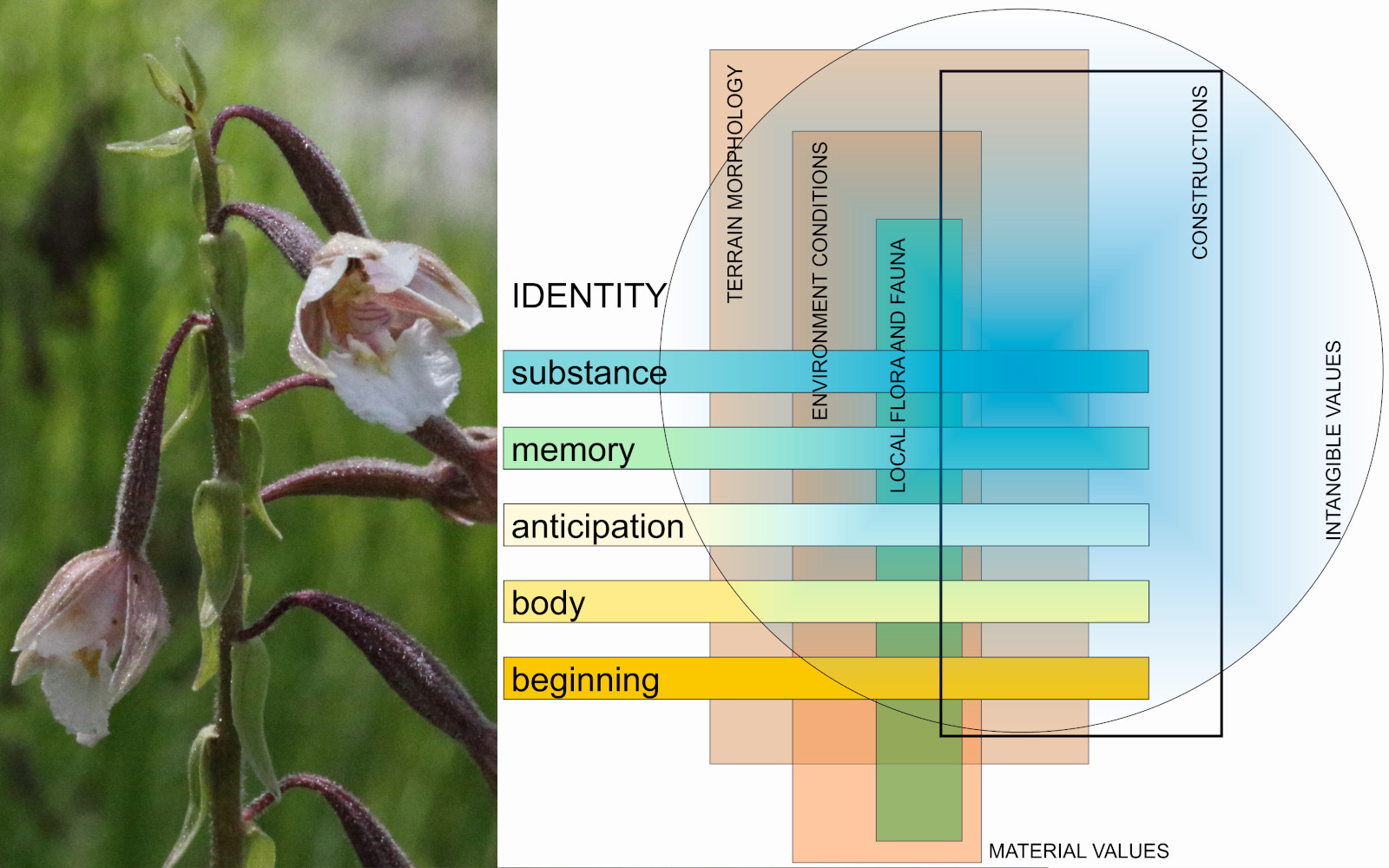
This article presents research carried out in the Lipinka Valley area in Świętochłowice, southern Poland, which was used to establish one of the statutory forms of nature protection in this area - the nature and landscape complex. As a result of analyses of historical sources and literature data, anthropogenic changes to the environment were identified, including changes to the local morphology and hydrography of the area, as well as to the physical and chemical characteristics of soils and surface waters. Analyses of the flora and fauna of the area have shown the formation of a unique mosaic of ecosystems here. The post-industrial, wartime and natural landscapes are closely linked here, contributing to the common identity dimension of the site. This article aims to bring out the relationship between these landscapes by showing how they are interdependent, how they complement each other, and how their unique characteristics promote the conservation of life and biodiversity. The aspect of the identity of the landscape also appears here, but not only as a set of its features perceived by man, but also as an evolutionarily evolving structure that is independent of the conscious will of man.
References
Alberg, M. (1936). Cynk, ołów i materiały pochodne, monografia gospodarcza. Katowice: Wydawnictwa Instytutu Śląskiego.
Antrop, M., (2005). Why landscapes of the past are important for the future. Landscape and Urban Planning, 70(1–2), (pp. 21–34). DOI: https://doi.org/10.1016/j.landurbplan.2003.10.002
Beck, K.K., Mariani, M., Fletcher, M.S., Schneider, L., Aquino-López, M.A., Gadd, P.S., Heijnis, H., Saunders, K.M., Zawadzki, A. (2020). The impacts of intensive mining on terrestrial and aquatic ecosystems: A case of sediment pollution and calcium decline in cool temperate Tasmania, Australia. Environmental Pollution, 265, A: 114695. https://doi.org/10.1016/j.envpol.2020.114695. DOI: https://doi.org/10.1016/j.envpol.2020.114695
Berleant, A. (1992). The aesthetics of environment. Philadelphia: Temple Univ. Press.
Biskup, T., Droń, M., Śmiałęk, T. (2002). Obszar warowny Śląsk. Punkty oporu „Łagiewniki” i „Godula”. Ścieżka dydaktyczna. Bytom: Biuro Promocji Bytomia.
Bogdanowicz, W., Chudzicka, E., Pilipiuk, I., Skibińska, E. (2004). Fauna Polski. Charakterystyka i wykaz gatunków. Tom. I, Annelida, Arthropoda pro parte, Insecta pro parte (Coleoptera, Hemiptera, Hymenoptera, Lepidoptera). Warszawa: Muzeum i Instytut Zoologii PAN, 1-509.
Bogdanowicz, W., Chudzicka, E., Pilipiuk, I., Skibińska, E. (2007). Fauna Polski. Charakterystyka i wykaz gatunków. Tom. II, , Arthropoda pro parte, Insecta pro parte (Coleoptera, Hemiptera, Hymenoptera et Lepidoptera exclundur), Entognatha. Warszawa: Muzeum i Instytut Zoologii PAN, 1-509.
Bogdanowicz, W., Chudzicka, E., Pilipiuk, I., Skibińska, E. (2008). Fauna Polski. Charakterystyka i wykaz gatunków. Tom. III, , Arthropoda pro parte, (Chelicerata, Crustacea, Myriapoda), Acanthocephala, Bryozoa, Cnidaria, Entoprocta, Gastrotricha, Mollusca, Nematoda, Nematomorpha, Nemertea, Platyhelminthes, Porifera, Rotifera, Tartigrada. Warszawa: Muzeum i Instytut Zoologii PAN, 1-603.
Bogdanowicz, W., Chudzicka, E., Pilipiuk, I., Skibińska, E. (2014). Fauna Polski. Charakterystyka i wykaz gatunków. Tom. IV, Strunowce (Chordata), Kręgowce (Vertebrata): Kręgowce bezszczękowe (Petromyzontida), Promieniopłetwe (Actinopterygii), Płazy (Amphibia, Gady (Reptilia), Ptaki (Aves), Ssaki (Mammalia). Warszawa: Muzeum i Instytut Zoologii PAN, 1-580.
Bouchner, M. (1992). Śladami zwierząt, przewodnik, Warszawa: Multico.
Butler, A., & Sarlöv-Herlin, I. (2019). Changing landscape identity—practice, plurality, and power. Landscape Research, 44(3),271–277. https://doi.org/10.1080/01426397.2019.1589774 DOI: https://doi.org/10.1080/01426397.2019.1589774
Cabała, S., Sypień, B. (1987). Rozwój szaty roślinnej na wybranych zwałowiskach kopalń węgla kamiennego GOP. Archiwum Ochrony Środowiska, 3-4: 169-184.
Cabała, J., Teper, L. (2007). Metalliferous constituents of rhizosphere soils contaminated by Zn-Pb mining in southern Poland. Water, Air and Soil Pollution, 178: 351–362. https://doi.org/10.1007/s11270-006-9203-1. DOI: https://doi.org/10.1007/s11270-006-9203-1
Celiński, F., Czylok, A., Kubajak, A. (1996). Przewodnik przyrodniczy po Dąbrowie Górniczej. Krzeszowice: Planta.
Chmielewski, W.A. (1984). Tropy i ślady zwierząt, Warszawa: PTTK "Kraj".
Chmura, D., Molenda, T. (2012). Influence of Thermally Polluted Water on the Growth of Helophytes in the Vicinity of a Colliery Waste Tip. Water, Air and Soil Pollution, 223: 5877–5884. https://doi.org/10.1007/s11270-012-1323-1. DOI: https://doi.org/10.1007/s11270-012-1323-1
Chodyniecka, L., Zawiślak, L. (1993). Mineralogia i petrografia kopali metalicznych. Skrypt uczelniany Politechniki Śląskiej nr 1768, Gliwice.
Cohn, V.J., Rostański, A., Tokarska-Guzik, B., Trueman, I.C., Woźniak, G. (2001). The flora and vegetation of an old solvay proces tip in Jaworzno (Upper Silesia, Poland). Acta Societatis Botanicorum Poloniae, 70 (1): 47-60. DOI: https://doi.org/10.5586/asbp.2001.008
Council of Europe. (2000). European Landscape Convention. Florence, Strasbourg.
Dębicki, J. (1927). Przemysł cynkowy, szkic historyczno-gospodarczy. Warszawa: Gebethner i Wolff,
Diallo, M., Konaté, A., Sidibé, D. (2024). Collapse of underground galleries in gold-panning mines: Perception of stakeholders in the Doko Sub-Prefecture, Siguiri Prefecture, Republic of Guinea. Environmental & Socio-economic Studies, 12, 3: 23–36. https://doi.org/10.2478/environ-2024-0017. DOI: https://doi.org/10.2478/environ-2024-0017
Dobis, N. (1938). Przemysł cynku i ołowiu w Polsce. Będzin: Chrześcijańska Drukarnia „Nakładowa”.
Dobrowolska, M., Stasiła-Sieradzka, M., Rostański, A., Rostański, K.M., Jędrzejczyk-Korycińska, M. (2021). Research and analysis of working conditons in industrial occupations. Vol. 2, Optimisation of human functioning in modern working environment. The present. Gliwice: Wydawnictwo Politechniki Śląskiej.
Dulias, R. (2008). Changes in landscape in the neighbourhood of Żabie Doły in the Silesian Upland. Anthropogenic aspects of landscape transformations, 5: 13–19.
Dulias, R. (2016). The impact of mining on the landscape. A study of the Upper Silesian Coal Basin in Poland. Springer, Switzerland: p.209. https://doi.org/10.1007/978-3-319-29541-1. DOI: https://doi.org/10.1007/978-3-319-29541-1
Dulias, R. (2024). Upper Silesian Region – An example of Large- Scale Transformation of Relief by Mining. In P. Migoń & K. Jancewicz (Eds.) Landscapes and Landforms of Poland. Springer, Switzerland: 371–383. https://doi.org/10.1007/978-3-031-45762-3_21. DOI: https://doi.org/10.1007/978-3-031-45762-3_21
Gilewska, S. (1972). Wyżyny Śląsko-Małopolskie. [IN:] M. Klimaszewski, (Ed.) Geomorfologia Polski 1. Warszawa: Polskie Wydawnictwo Naukowe, 232–279.
Harnischmacher, S., Zepp, H. (2013). Mining and its impact on the earth surface in the Ruhr District (Germany). Zeitschrift für Geomorphologie, 58, 3: 3–22. https://doi.org/10.1127/0372-8854/2013/S-00131. DOI: https://doi.org/10.1127/0372-8854/2013/S-00131
Hutchinson, T.C., Whitby, L.M. (1977). The effects of acid rainfall and heavy metal particulates on a boreal Forest ecosystem near the Sudbury smelting region of Canada. Water, Air and Soil Pollution, 7: 421–438. https://doi.org/10.1007/BF00285542. DOI: https://doi.org/10.1007/BF00285542
Illustrierter Führer durch das Oberschlesische Industriegebiet. Mit besonderer Berücksichtigung der Orte Kattowitz, Königshütte, Beuthen, Tarnowitz, Zabrze und Gleiwitz. Leipzig 1904.
Jackson, J. B. (1984). Discovering the vernacular landscape. New Haven: Yale Univ. Press.
Jaros, J. (1984). Słownik historyczny kopalń węgla kamiennego na ziemiach polskich. Katowice: Śląski Instytut Naukowy.
Jędrzejczyk-Korycińska, M., Rostański, A. (2015). Tereny o wysokiej zawartości metali ciężkich w podłożu na Górnym Śląsku. In Wierzbicka, M. (ed.) Ekotoksykologia. Rośliny, gleby, metale. Warszawa: Wydawnictwa Uniwersytetu Warszawskiego, 171-185.
Khaledi, H., Khakzand, M., Faizi, M. (2022). Landscape and Perception: A systematic review. Landscape Online 97/2022, Article 1098. https://doi.org/10.3097/LO.2022.1098 DOI: https://doi.org/10.3097/LO.2022.1098
Kolakowski, L. (2003). On collective identity. Partisan Review, vol. 70, no. 1, winter 2003. Gale Literature Resource Center, Retrieved February 18, 2025, from https://link.gale.com/apps/doc/A97724078/LitRC?u=anon~cf190852&sid=googleScholar&xid=2d5c485b.
Kotas, A. (1982). Zarys budowy geologicznej Górnośląskiego Zagłębia Węglowego. In Przewodnik 54 Zjazdu Polskiego Towarzystwa Geologicznego. Warszawa: Wydawnictwa Geologiczne, 45–72.
Kouŕimský, J. (1994). Encyklopedia minerałów i skał. Warszawa: Oficyna Wydawnicza "Delta W-Z".
Krantz, F., 1911. Die Entwickelung der oberschlesischen Zinkindustrie. Kattowitz O.-S.: Verlag von Gebrüder Böhm.
Kruczała, A. (2000). Atlas klimatu województwa śląskiego. Katowice: Instytut Meteorologii i Gospodarki Wodnej, Oddział w Katowicach.
Kułak, A., Chmielewski, T. J. (2012). Atlas tożsamości krajobrazu lokalnego jako forma zintegrowanego zapisu cech zespołu wnętrz krajobrazowych (The Local Landscapes Identity Atlas as a form of integrated recording of landscape interiors complex features). Problemy Ekologii Krajobrazu, T. XXXIII, 245-252.
Lamparska-Wieland, M. (2003). Atlas zmian wybranych elementów krajobrazu terenów górniczych i pogórniczych Płaskowyżu Tarnowickiego. Prace Wydziału Nauk o Ziemi, Uniwersytet Śląski, Sosnowiec 27: 4.
Leśniok, M. (2011). Changeability of Air Pollution in Katowice Region (Central Europe, Southern Poland). In F. Nejadkoorki (ed.) Advanced Air Pollution. InTech Open. https://doi.org/10.5772/22013. DOI: https://doi.org/10.5772/22013
Lewandowski, J. (2015). Kenozoik region śląsko-krakowskiego. Katowice: Wydawnictwo Uniwersytetu Śląskiego.
Loupa Ramos, I., Bianchi, P., Bernardo, F., Van Eetvelde, V. (2019). What matters to people? Exploring contents of landscape identity at the local scale. Landscape Research, 44(3), 320–336. https://doi.org/10.1080/01426397.2019.1579901. DOI: https://doi.org/10.1080/01426397.2019.1579901
Luo, X., Wu, C., Lin, Y., Li, W., Deng, M., Tan, J., Xue, S. (2023). Soil heavy metal pollution from Pb/Zn smelting regions in China and the remediation potential of biomineralization. Journal of Environmental Sciences (China), 125: 662–677. https://doi.org/10.1016/j.jes.2022.01.029. DOI: https://doi.org/10.1016/j.jes.2022.01.029
Machowski, R., Rzetala, M.A., Rzetala, M., Solarski, M. (2016). Geomorphological and hydrological effects of subsidence and land use change in industrial and urban areas. Land Degradation and Development, 27: 1740–1752. https://doi.org/10.1002/ldr.2475. DOI: https://doi.org/10.1002/ldr.2475
Mirek, Z., Piękoś-Mirkowa, H., Zając, A., Zając, M. (2002). Flowering plants and pteridophytes of Poland a checklist. Kraków: Szafer Institue of Botany Polish Academy of sciences.
Mizerski, W., Sylwestrzak, H. (2002). Słownik geologiczny. Warszawa: Wydawnictwo Naukowe PWN.
Murphy, M. D. (2005). Landscape architecture theory. Long Grove: Waveland Press Inc.
Myczkowski, Z. (2003). Krajobraz wyrazem tożsamości w wybranych obszarach chronionych w Polsce. Kraków: Politechnika Krakowska, 1–228.
Nita, J. (2013). Zmiany w krajobrazie powstałe w wyniku działalności górnictwa surowców skalnych na obszarze Wyżyn Środkowopolskich. Katowice: Uniwersytet Śląski.
Oliver, T.H., Doherty, B., Dornelles, A., Gilbert, N., Greenwell, M.P., Harrison, L.J. (2022). A safe and just operating space for human identity: a systems perspective. The Lancet Planetary Health, 6, e919-e927. https://doi.org/10.1016/S2542-5196(22)00217-0 DOI: https://doi.org/10.1016/S2542-5196(22)00217-0
Parusel, J.B., Urbisz, A. (Eds.), (2012). Czerwona lista roślin naczyniowych województwa śląskiego In Czerwone listy wybranych grup grzybów i roślin województwa śląskiego, RAPORTY OPINIE 6: 105-177, Katowice: Centrum Dziedzictwa Przyrodniczego Górnego Śląska.
Pasieczna, A. (ed.). (2016). Szczegółowa mapa geochemiczna Górnego Śląska. Arkusz Chorzów, 1:25 000. Warszawa: Państwowy Instytut Geologiczny.
Piernikarczyk, J. (1936). Historja górnictwa i hutnictwa na Górnym Śląsku. Katowice: Śląski Związek Akademicki.
Pietrucha, D. (ed.) (2006). Fortyfikacje Obszaru Warownego „Śląsk”. Piekary Śląskie: Pro Fortalicium.
Popiołek, K. (1965). Górnośląski przemysł górniczo-hutniczy w drugiej połowie XIX wieku. Katowice-Kraków: Śląski Instytut Naukowy w Katowicach.
Popiołek, K. (1984). Historia Śląska, wydanie II. Katowice: Śląski Instytut Naukowy.
Richling, A., Solon, J., Macias, A., Balon, J., Borzyszkowski, J., Kistowski, M. (2021). Regionalna geografia fizyczna Polski. Warszawa: Bogucki Wydawnictwo Naukowe.
Rocha-Nicoleitea, E., Overbecka, G.E., Müller, S.C. (2017). Degradation by coal mining should be priority in restoration planning. Perspectives in Ecology and Conservation, 15, 3: 202–205. https://doi.org/10.1016/j.pecon.2017.05.006. DOI: https://doi.org/10.1016/j.pecon.2017.05.006
Rostański, A. (1996). Hałdy przemysłowe – uciążliwy, a zarazem interesujący element krajobrazu Górnego Śląska. Przegląd Przyrodniczy, 7(3-4): 259-262.
Rostański, A. (1997). Flora of the industrial dumps of Upper Silesia Region. (In Polish). Archiwum Ochrony Środowiska, 23(3-4): 159-165.
Rostański, A. (2000). Spontaneous flora of post-industrial sites of the Upper Silesia Region. A summary of investigations (1989 – 1999) (In Polish). Acta Biologica Silesiana, 35(52) 131 – 154.
Rostański, A., Michalska, M. (2003). Obfite stanowisko kruszczyka błotnego (Epipactis palustris (L.) Cranz) na zwałowisku hutniczo-kopalnianym w Świętochłowicach-Chropaczowie (Górny Śląsk). Archiwum Ochrony Środowiska vol.29, no.2, 115-118.
Rostański, A. (2006). Spontaneous plant cover on colliery spoil heaps in Upper Silesia (Southern Poland). Katowice: Wydawnictwo Uniwersytetu Śląskiego, 1 - 230.
Rostański, A. (2023). Świat roślin. Szata roślinna miasta. In T. Bryś-Szczygieł (ed.), Przyroda Radzionkowa. Ukryte skarby ziemi radzionkowskiej. Radzionków: Stowarzyszenie Przyjaciół i Sympatyków Ekologii Zielona Ziemia, 1 – 276 .
Rostański, K.M. (2018). Connotations in architecture. Part 1. On the art of observation of associations drawn from culture. Gliwice: Wydawnictwo Politechniki Śląskiej.
Rostański, K.M., Rostański, A., Gorczyca, J., Dulias, R., Jonczy, I., Bronicka, B. (2020). Dokumentacja projektowa do ustanowienia Zespołu Przyrodniczo Krajobrazowego „Dolina Lipinki” w Świętochłowicach. Katowice: Pracownia HORTUS, typescript of the investment project.
Rostański, K.M. (2021). Contaminated areas as recreational places-exploring the validity of the decisions taken in the development of Antonia Hill in Ruda Śląska, Poland. Land, 2021 vol. 10 iss. 11 s. 1-20 (art. no. 1165), https://doi.org/10.3390/land10111165. DOI: https://doi.org/10.3390/land10111165
Rozporządzenie Ministra Środowiska z dnia 1 Września 2016 r. w Sprawie Sposobu Prowadzenia Oceny Zanieczyszczenia Powierzchni Ziemi Dz.U. 2016, Poz. 1395. Retrieved January 24, 2025, from http://isap.sejm.gov.pl/isap.nsf/DocDetails.xsp?id=WDU20160001395
Rzętała, M.A. (2015). Lead in the bottom sediments of water bodies in the Upper Silesia region (southern Poland). Desalination and Water Treatment, 54, 3: 779–789. https://doi.org/10.1080/19443994.2014.886297. DOI: https://doi.org/10.1080/19443994.2014.886297
Solarski, M., Machowski, R., Rzetala, M., Rzetala, M.A. (2022). Hypsometric changes in urban areas resulting from multiple years of mining activity. Scientific Reports, 12: 2982. https://doi.org/10.1038/s41598-022-06847-8. DOI: https://doi.org/10.1038/s41598-022-06847-8
Solger, H. (1860). Der Kreis Beuthen in Oberschlesien. Breslau: Verlag von Wilhelm Gottlieb Korn. https://www.sbc.org.pl/publication/9870
Stobbelaar, D.J., Pedroli, B. (2011). Perspectives on Landscape Identity: A Conceptual Challenge, Landscape Research, 36:3, 321-33 https://doi.org/10.1080/01426397.2011.564860); DOI: https://doi.org/10.1080/01426397.2011.564860
Sylwestrzak, H. (1998). Sfaleryt. Minerał wprowadzający w błąd. Warszawa: Państwowy Instytut Geologiczny.
Świtała-Trybek, D., Świtała-Mastalerz, J. (2018). Hałdy poprzemysłowe – ich kulturowy i turystyczny potencjał (na przykładzie wybranych obiektów w województwie śląskim. Zeszyty Naukowe Turystyka i Rekreacja, 2, 22: 125–141.
Tokarska-Guzik, B. (1996). Rola hałd zasadowych w utrzymaniu lokalnej bioróżnorodności. Przegląd Przyrodniczy, 7, 3–4: 261–266.
Tokarska-Guzik, B., Rostański, A. (2001). Prospects and limitation of natural management of post-industrial areas (In Polish). Natura Silesiae Superioris, Suplement: 5 – 17.
Tokarska-Guzik, B. (1996). Ochrona przyrody. In K. Rostański (ed.), Przyroda województwa katowickiego. Krzeszowice: Wydawnictwo Kubajak, 69 – 135.
Trueman, I.C., Tokarska-Guzik, B., Cohn, E.V.J. (2022). Brownfield Sites as Hot Spots of Plant Diversity. In A. Dyczko, A. Jagodziński, G. Woźniak (Eds.), Green Scenarios: Mining Industry Responses to Environmental Challenges of the Anthropocene Epoch, London: CRC Press, https://doi.org/10.1201/9781003271604-8 DOI: https://doi.org/10.1201/9781003271604-8
Waga, J.M. (1995). Wstępne wskazania proponowanych obiektów ochrony przyrody na obszarze miasta Świętochłowice oraz wyznaczenie obszarów, na których konieczne jest przeprowadzenie prac w celu przywrócenia wartości przyrodniczych i krajobrazowych. Katowice: Fundacja Przestrzeni Górnego Śląska.
Wierzbicka, M., Rostański, A. (2002). Microevolutionary changes in ecotypes of calamine waste heap vegetation near Olkusz, Poland: a review. Acta Biologica Cracoviensia, Ser. Botanica 44: 7-19, Kraków: Polish Academy of Sciences.
Woźniak, G., Pasierbiński, A., Rostański, A. (2003). The diversity of spontaneous woodland vegetation on coals mine heaps of Upper Silesian industrial region. Archives of Environmental Protection, 29, 2: 93–105.
Wójcik, M., Gonnelli, C., Selvi, F., Dresler, S., Rostański, A., Vangronsveld, J. (2017). Metallophytes of Serpentine and calamine soils – their unique ecophysiology and potential for phytoremediation. In: A. Cuypers & J. Vangronsveld (Eds.), Phytoremediation, 83: 1–42. DOI: https://doi.org/10.1016/bs.abr.2016.12.002
Ziyaee, M. (2018). Assessment of urban identity through a matrix of cultural landscapes. Cities, Volume 74, 2018, 21-31, https://doi.org/10.1016/j.cities.2017.10.021. DOI: https://doi.org/10.1016/j.cities.2017.10.021
Downloads
Published
How to Cite
Issue
Section
Categories
License
Copyright (c) 2025 Krzysztof Rostański, Adam Rostański, Renata Dulias

This work is licensed under a Creative Commons Attribution 4.0 International License.